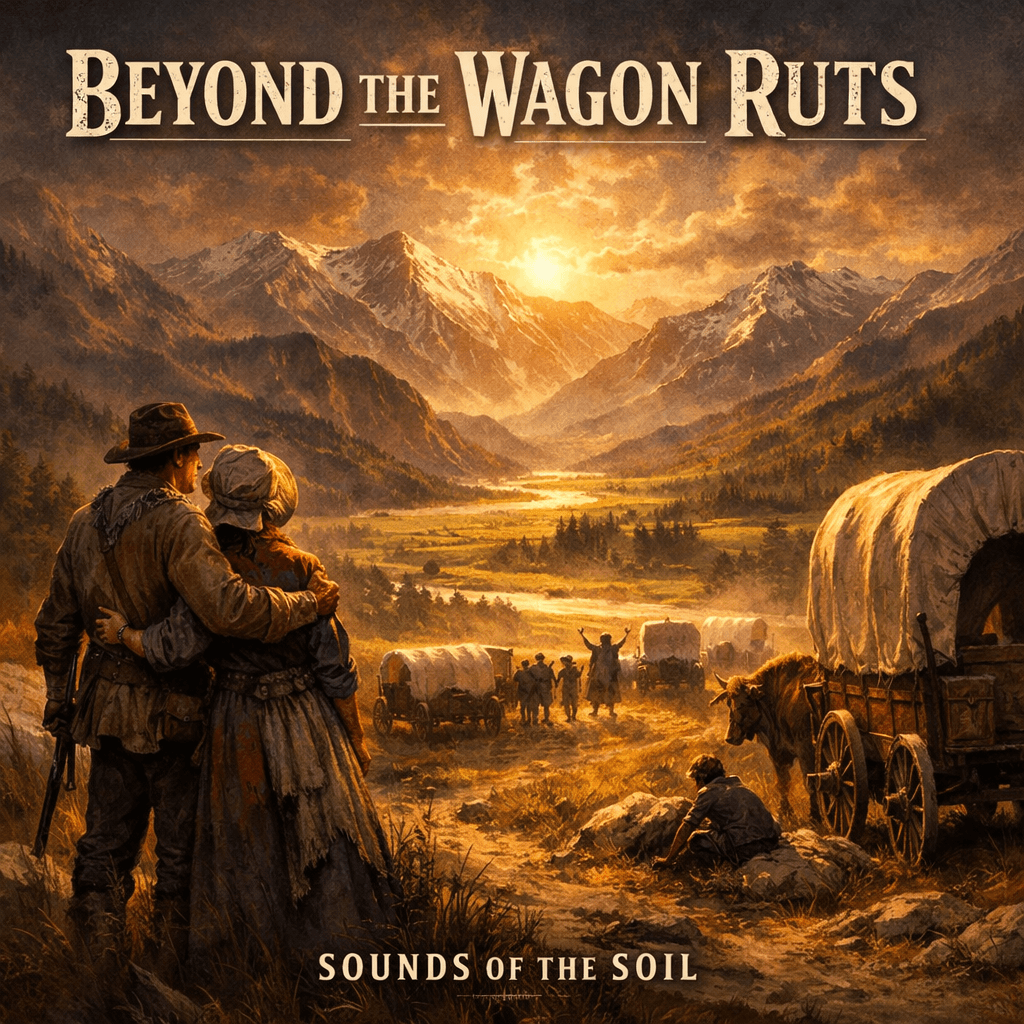
By Light of the Soil
Introduction
When we look back at the great wagon migrations of the nineteenth century, it is tempting to romanticize the journey westward. Paintings often show proud wagons rolling across open prairie under wide skies, families united by hope and determination. But the historical record—especially the diaries of emigrants—tells a much harsher story.
Pioneer life on the trail was not simply difficult. In many cases, it was brutally unforgiving. Survival depended not only on courage, but on discipline, coordination, and the ability to develop a sustainable daily rhythm. Wagon trains that failed to establish this rhythm often suffered terrible consequences.
The trail rewarded steadiness and punished disorder.
Those who did not adapt quickly often paid with their health, their supplies, or their lives.
The Trail as a Living System
A wagon train was more than a line of wagons. It was a moving ecosystem composed of people, animals, equipment, and limited resources. Every element had to function properly for the whole system to survive.
A typical train might include:
- 20–50 wagons
- several hundred oxen or mules
- families with small children
- livestock such as cattle or chickens
- thousands of pounds of food and equipment
Each day required the careful coordination of food, water, animal care, navigation, and rest.
If even one of these systems broke down—if animals weakened, food spoiled, or water became contaminated—the entire train could quickly spiral into crisis.
The pioneers learned, often painfully, that the trail demanded balance.
Disease: The Invisible Killer
One of the most feared hardships was disease, especially cholera. During peak migration years in the late 1840s and early 1850s, cholera outbreaks followed the emigrant trails like a shadow.
The disease struck suddenly and violently. Victims experienced severe vomiting, dehydration, and muscle spasms that could twist the body in agony. Within hours a strong, healthy person could collapse.
Many wagon trains watched in horror as people who had walked beside the wagons in the morning were buried beside the trail by evening.
Because travelers did not yet understand bacteria or sanitation, outbreaks often spread through contaminated water sources used by multiple wagon trains. Entire sections of trail became corridors of sickness and death.
Graves dotted the migration routes.
For many emigrants, the most haunting memory of the journey was not the landscape, but the long succession of freshly turned earth beside the wagon ruts.
The Brutality of Accidents
The machinery of the trail itself was dangerous.
A fully loaded prairie wagon could weigh several thousand pounds. Its wheels were solid wood banded with iron. When wagons moved across uneven ground, ruts and rocks caused sudden jolts that could throw passengers or drivers beneath the wheels.
Many travelers walked beside the wagons to escape the cramped interior. But this placed them dangerously close to the massive wheels.
Diaries recount tragic moments when a stumble or misstep placed someone beneath a moving wagon. Once the wheels began rolling, stopping them quickly was nearly impossible.
Children were especially vulnerable.
River crossings were another constant danger. Wagons sometimes tipped in swift currents, sweeping away supplies—or worse, family members.
There were also accidental shootings, animal stampedes, and crushing injuries on steep hills where wagons ran out of control.
The trail was filled with small moments where a single mistake could become fatal.
Hunger and the Discipline of Rations
Food planning was one of the most critical challenges of the journey. Families typically packed hundreds of pounds of flour, salt pork, beans, and dried fruit to last the entire trip west.
But the journey could last four to six months.
Families who consumed their food too quickly during the early, easier weeks often faced severe shortages later, particularly when crossing deserts or mountains where hunting and gathering were limited.
Experienced wagon masters insisted on strict ration discipline. Even when supplies appeared plentiful, meals remained simple and carefully portioned.
The trail taught an unforgiving lesson:
Survival required restraint.
Animals: The True Lifeline
The entire migration depended on draft animals—usually oxen. These animals pulled the wagons, carried supplies, and determined how far a train could travel each day.
Oxen needed constant grazing and rest. If they became exhausted or injured, wagons might be abandoned.
Many emigrants came to understand that caring for animals was as important as caring for people. Water, grass, and rest were planned carefully.
Without healthy animals, the journey stopped.
In the vast plains and deserts, a stalled wagon train could quickly become a desperate situation.
The Psychological Toll
Beyond the physical hardships was the emotional strain of the journey.
Travelers faced:
- months of uncertainty
- illness and injury among family members
- the burial of loved ones beside the trail
- the relentless physical exhaustion of daily travel
Yet the journey rarely paused for grief.
Many diaries describe short funerals followed by the grim necessity of continuing forward.
Despite these hardships, pioneers often maintained morale through shared routines—songs around the fire, storytelling, prayer, and companionship.
These small rituals helped restore the rhythm of daily life even in the harshest conditions.
The Rhythm That Meant Survival
One of the most important lessons of the trail was the importance of rhythm.
Successful wagon trains developed disciplined routines:
- rising before dawn
- gathering animals
- traveling during cooler hours
- resting livestock during midday
- carefully selecting evening campsites with grass and water
These rhythms allowed both people and animals to endure the long journey.
When the rhythm broke—when exhaustion led to poor decisions or animals were pushed too hard—the consequences could be severe.
The trail demanded patience, balance, and cooperation.
Lessons for Today
The pioneer journey reminds us of something fundamental about human survival and resilience.
Systems—whether a wagon train, a farm, or a community—must find balance in order to endure. Resources must be managed carefully. Cooperation must replace chaos. Sustainable rhythms must replace reckless urgency.
The pioneers who reached the western valleys were not necessarily the strongest or the most adventurous.
Often, they were simply the ones who learned how to live in harmony with the limits of the journey.
Conclusion
The wagon trails of the nineteenth century were corridors of both hope and hardship. The path west offered opportunity, but it demanded discipline and resilience in return.
Those who established sustainable rhythms—caring for animals, rationing food, protecting health, and working together—were able to endure the journey.
Those who did not often faced devastating consequences.
The lesson of the trail is simple but powerful:
Survival belongs to those who learn how to live within the rhythm of the system that sustains them.
Light of the Soil®
Understanding systems of survival—from the soil beneath our feet to the history that shaped us.