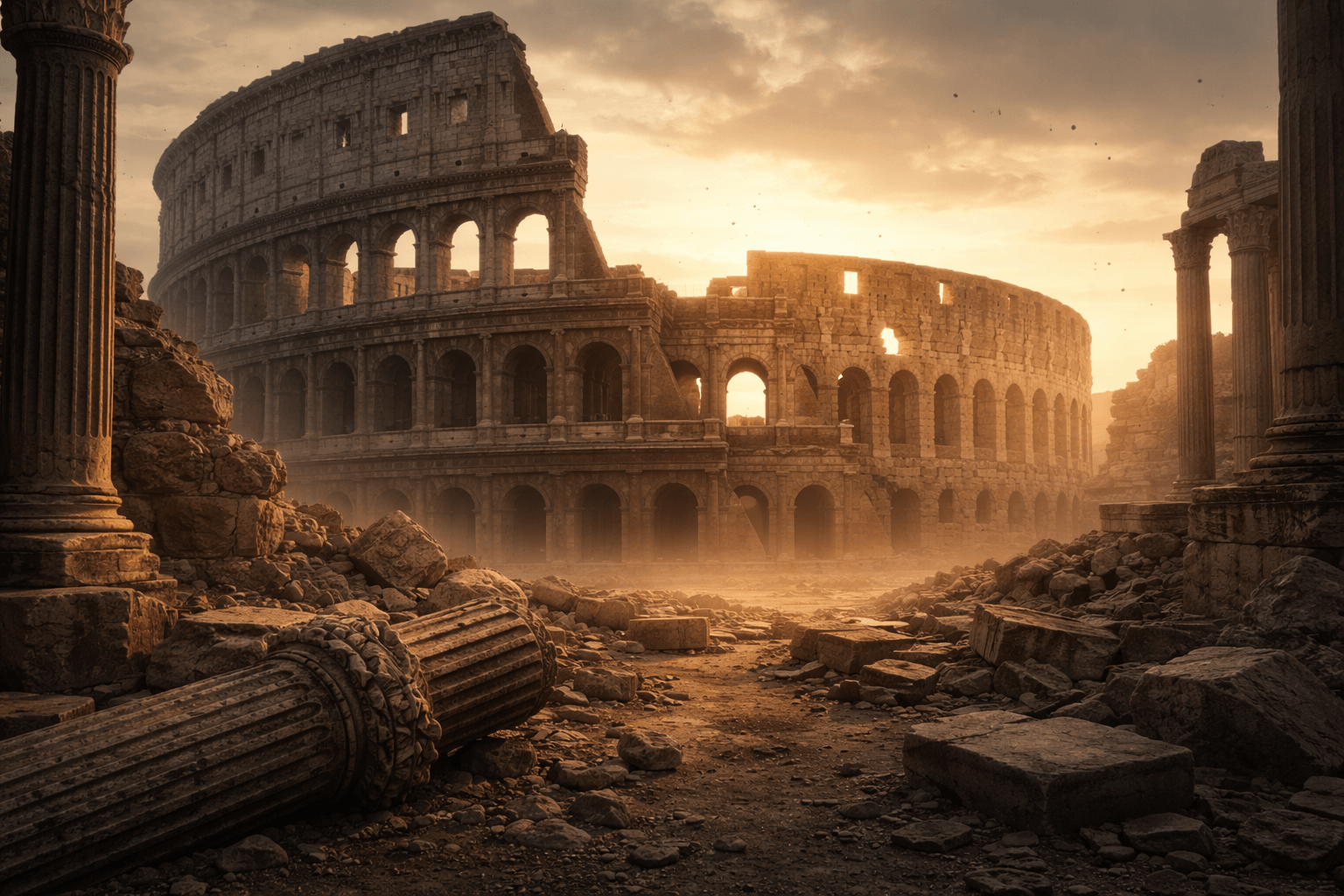
Communities work together. Families build for the future. Citizens accept that freedom and stability require participation.
In those early years, the bond between people and their society is strong.
But time has a way of changing the conditions that once shaped a people.
As prosperity grows, daily life becomes easier. The struggles that forged the character of earlier generations become distant memories. Children and grandchildren grow up in a world that feels stable and permanent, even though that stability was carefully constructed by those who came before.
Slowly, without anyone noticing, the relationship between citizens and their civilization begins to change.
The habits that once held society together begin to loosen.
History shows that when people forget the effort required to build a civilization, they often begin to assume that its benefits will continue automatically. The institutions that support their lives — economic systems, laws, traditions, and civic structures — start to feel like permanent features of the landscape rather than fragile achievements maintained through constant care.
But civilizations are not self-sustaining.
They require stewardship.
When fewer people feel responsible for maintaining the common good, small cracks begin to appear. Civic participation declines. Public trust becomes more fragile. The idea that society belongs to all of us is slowly replaced by the quieter belief that someone else will take care of it.
At first, these changes seem harmless.
The streets still function. The markets still operate. The institutions still stand.
Yet something subtle has shifted beneath the surface.
Civilizations also depend on memory. Healthy societies remember the struggles that shaped them. They teach their children not only about victories, but about the sacrifices and responsibilities that made those victories possible.
Memory creates gratitude.
Gratitude creates stewardship.
But when historical memory fades, gratitude fades with it. Without that connection to the past, it becomes easier to view civilization not as something inherited and protected, but simply as a system that exists for personal convenience.
Over time, this quiet shift in mindset can weaken the foundations of even the strongest societies.
Another sign of decline often appears in the loss of civic trust. When people begin to believe that their neighbors, leaders, or institutions are acting only for themselves, cooperation becomes more difficult. Conversations grow more hostile. Shared problems become harder to solve.
Trust, once broken, is difficult to restore.
Yet the most important lesson from history is not that civilizations decline.
The most important lesson is that renewal is always possible.
Strength returns when people remember that a civilization is not an abstract structure somewhere above them. It is a living system sustained by millions of individual decisions — decisions to participate, to care for community, to pass forward what was inherited.
Civilizations endure when ordinary citizens quietly accept the role of stewardship.
Not because they are forced to.
But because they understand that the work of maintaining a healthy society is never truly finished.
Each generation receives a civilization it did not build.
What matters most is what they choose to do with it before passing it on.